The glove follows the job
A glove that survives a rebar yard will fail on a 15-second connector assembly, and the glove that gives you fingertip feel will not last a shift in a foundry. We match construction to task — gauge, coating, cut level and cuff — rather than selling one best-seller into every application.
- 6Core applications
- 7–21GGauge range
- A3–A6ANSI cut levels
- EN 388 / EN 511Rated standards
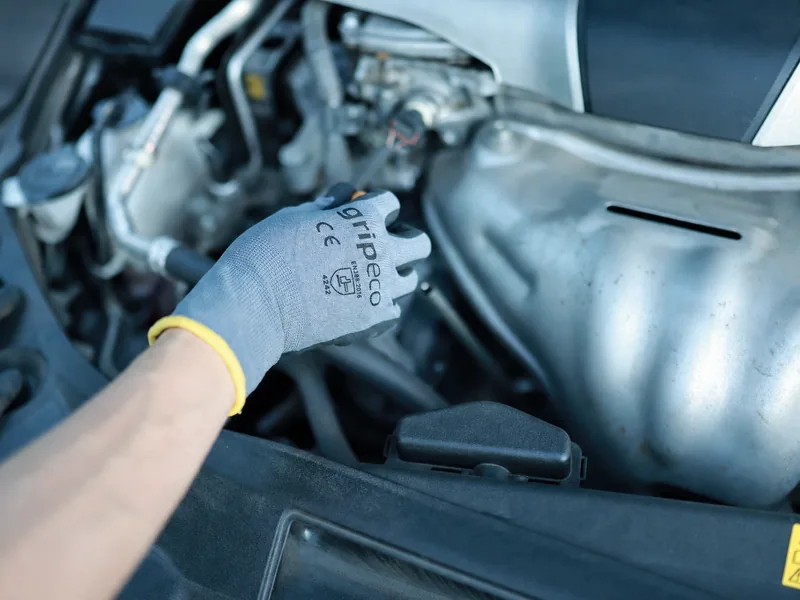
Automotive assembly
Assembly line work punishes a glove in two directions at once. The hand is in and out of oil, coolant and trim clips all shift, so grip has to hold on a wet surface — but the same glove has to let a technician feel a connector click and swipe a torque screen. Thick gloves slow the line; thin gloves tear at the thumb.
- Engine and transmission assembly
- Trim, harness and connector fitting
- Paint-shop and body-shop handling
- Undercarriage and inspection work
For oily engine-bay work we usually recommend a foam or micro-foam nitrile rather than a smooth finish — the open cell holds grip once the surface is wet, where a smooth coating goes slick.
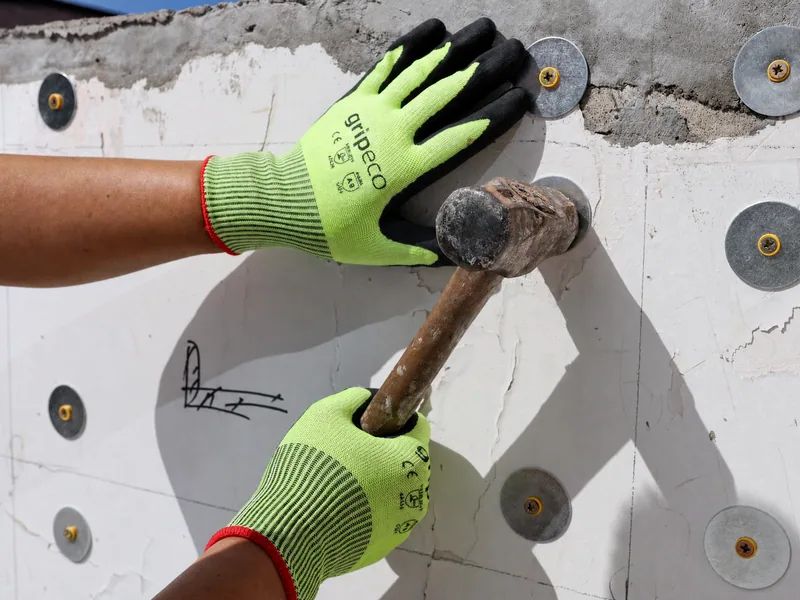
Construction & masonry
Site work is abrasive rather than sharp. Block, brick, rebar ties and scaffold clamps wear a palm out from the outside in, and wet concrete pulls moisture through a knit back. The other failure mode is impact — knuckles against formwork, hammers and dropped material — which a cut rating does not measure.
- Rebar tying and steel fixing
- Block laying and rendering
- Formwork and scaffolding
- Demolition and site clearance
Where impact is the main risk rather than cuts, ask for a TPR backing — it is a different glove, not an upgrade to the same one.
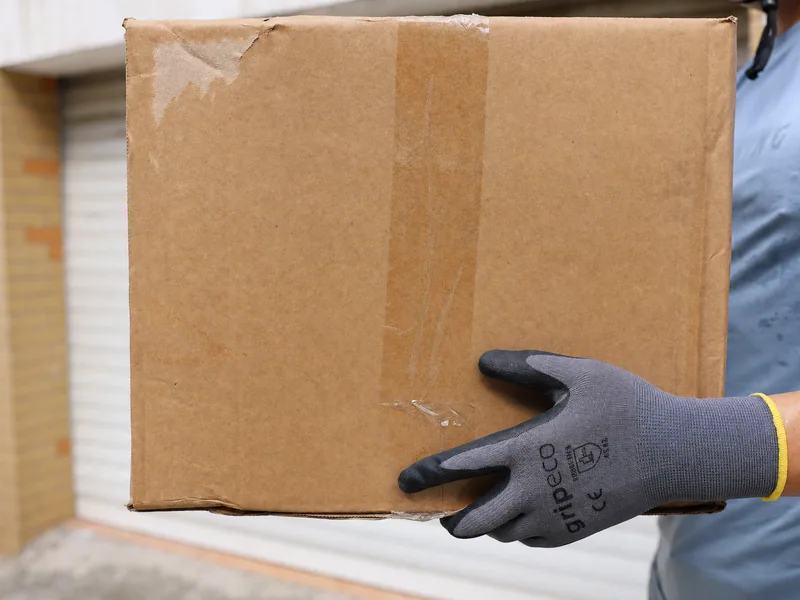
Warehousing & logistics
A picker handles several hundred cartons a shift and the cardboard edge is the hazard, not a blade. Gloves fail here for boring reasons: the palm polishes smooth, the cuff loses elasticity, or the fit is loose enough that grip strength drops. Cost per pair matters more than cut level, but a glove that tears at hour six costs more than it saves.
- Picking and packing
- Pallet and container loading
- Returns and sorting
- Cold-store and chilled distribution
For chilled and frozen distribution ask for the EN 511-rated constructions — a standard coated glove stiffens below zero and grip falls away with it.
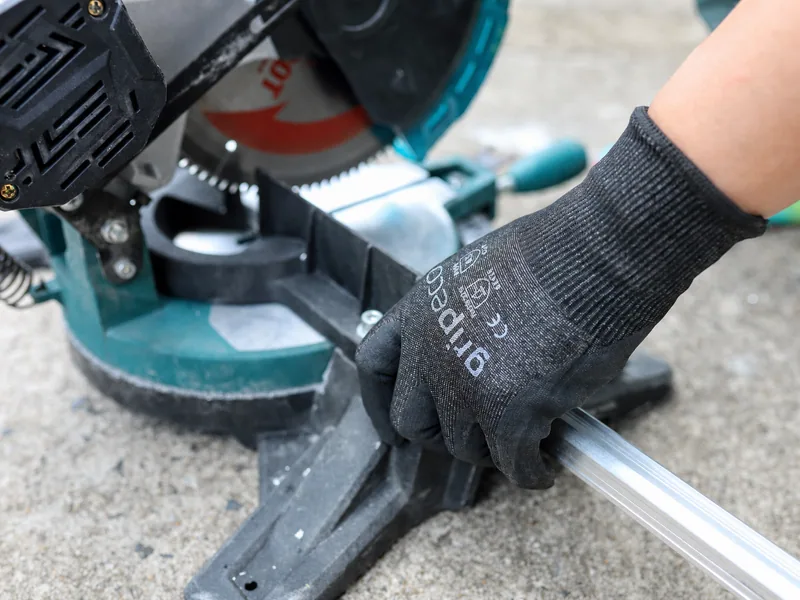
Metalworking & fabrication
Sheet metal is the classic cut hazard: a rolled edge will slice through a knit glove and a deburred edge will still catch. The complication is that fabrication also involves oil, swarf and hot parts, and a glove that protects against the edge often costs the dexterity needed to position a small component.
- Sheet metal and coil handling
- Press, stamping and deburring
- Welding support and grinding
- Pipe, tube and profile cutting
Above A5, cut resistance usually comes from the yarn blend rather than the coating — which is why the liner specification matters more than the colour of the palm.
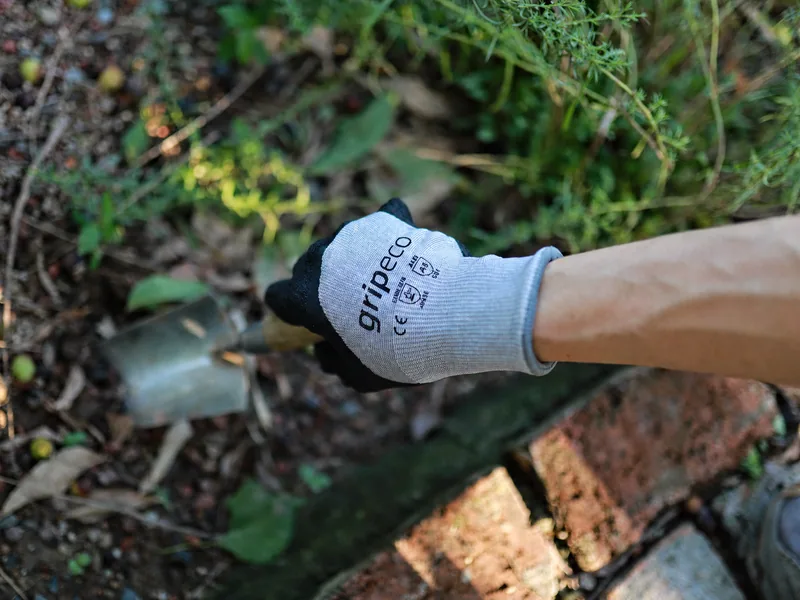
Agriculture & forestry
Outdoor work is wet, dirty and inconsistent. The glove gets soaked in the morning, dries on a fence post at lunch and is expected to grip a pruning saw in the afternoon. UV and repeated washing destroy coatings faster here than in any indoor application, and sizing has to cope with a workforce that wears the same pair all season.
- Pruning, trimming and brush cutting
- Nursery and greenhouse work
- Harvest and packhouse handling
- Fencing and general maintenance
Crinkle latex still gives the best wet-grip-per-dollar outdoors. Where thorns rather than abrasion are the problem, move up to a cut-rated liner instead.

Cold storage & food processing
A cold room is the hardest environment for a coated glove. Nitrile stiffens, grip drops, and a liner that is comfortable at 20 °C becomes a liability at −25 °C. Add washdowns and constant moisture and the requirements pull against each other: insulation wants thickness, hygiene wants a smooth non-porous surface, and throughput wants dexterity.
- Cold-store picking and loading
- Chilled and frozen packing lines
- Washdown and sanitation
- Produce and protein handling
Where your market requires a food-contact declaration, tell us the destination and the construction at quotation stage — we will confirm what the specific glove can support rather than assume it.
Also supplying
The same constructions go into these sectors under different brand names and carton specs.
EN 388 and ANSI, side by side
Two systems, one glove. If you buy for both Europe and North America, this is the mapping your packaging has to survive.
EN 388:2016
| Code | Property | Scale | Measured |
|---|---|---|---|
| a | Abrasion | 1–4 | Cycles on abrasive paper |
| b | Cut (coupe) | 1–5 or X | Legacy blade test; X means see TDM |
| c | Tear | 1–4 | Force to tear a notched sample |
| d | Puncture | 1–4 | Point force, not edge |
| e | Cut TDM-100 | A–F | ISO 13997 — the number that predicts real blade performance |
ANSI/ISEA 105-2024
| Code | Property | Scale | Measured |
|---|---|---|---|
| A1–A9 | Cut | A1 lowest | Measured in grams of force, TDM method |
| 0–6 | Abrasion | 0–6 | Higher is more cycles |
| 0–5 | Puncture | 0–5 | Newtons |
| 1–3 | Impact | 1–3 | Back-of-hand, optional test |
Rough equivalence — for planning only
The two standards use different test methods and do not convert exactly. Always quote the standard the product was actually tested to.
| ANSI cut | EN 388 TDM | Where it fits |
|---|---|---|
| A1 | ≈ 1–2 | General handling, light assembly |
| A2 | ≈ 3 | Packaging, warehouse, light sheet |
| A3 | ≈ 3–4 | Assembly, maintenance, automotive |
| A4 | ≈ 4–5 | Construction, heavy assembly |
| A5 | ≈ 5 / C | Metal fabrication, glass |
| A6 | ≈ D | Sharp sheet, demolition, recycling |
Tell us the task, we will name the glove
Describe the application — material handled, exposure, shift length and the injury you are trying to stop — and we will recommend two or three constructions with the trade-offs spelled out.