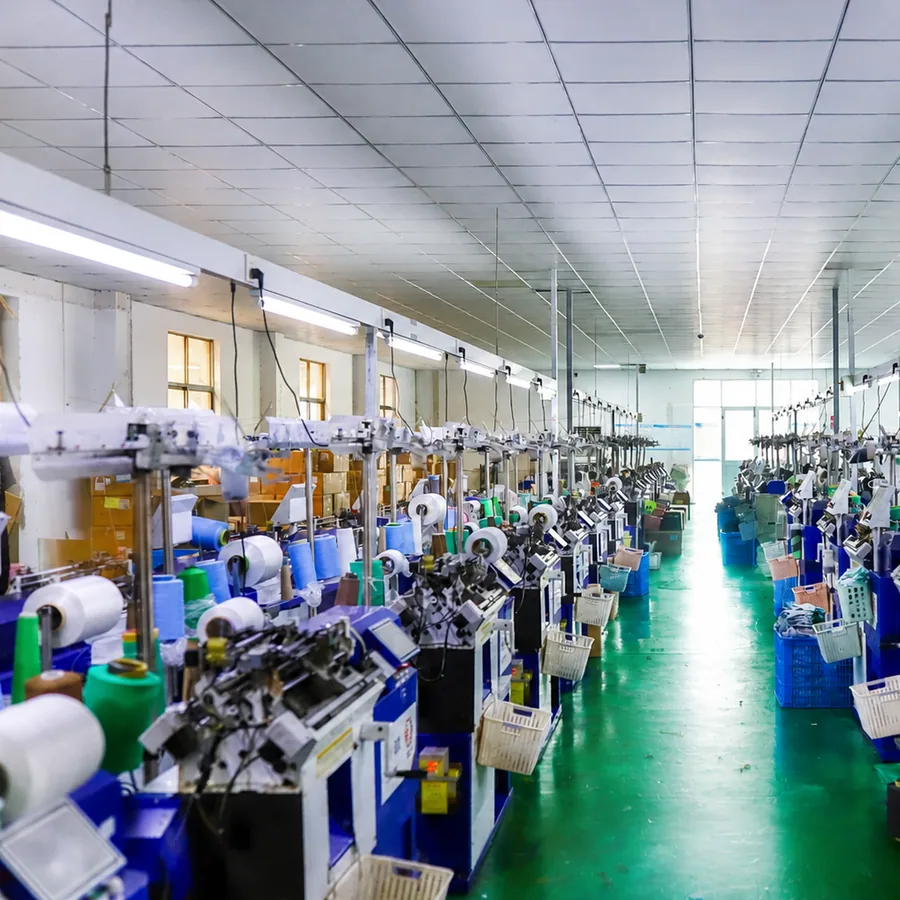
Gauge is the number of needles per inch on the knitting machine. Higher gauge means more, finer needles and a tighter knit from a thinner yarn. That is the whole definition — everything else is consequence.
What higher gauge buys you
Dexterity. An 18 or 21 gauge liner is thin enough that a worker can pick a washer off a bench, feel a connector seat, or operate a touchscreen without removing the glove. Coating weight per glove drops too, so the glove is lighter and less fatiguing over a shift.
What it costs you
Abrasion life, mostly. There is less yarn in the liner and less material between the hand and the surface, so a thin liner wears through faster on a rough edge. Fine yarns are also more expensive per kilogram and slower to knit, so the glove costs more — which surprises buyers who assume thin means cheap.
| Gauge | Feel | Typical use | Watch out for |
|---|---|---|---|
| 7G | Heavy, low dexterity | Cold storage, heavy handling | Poor fingertip control |
| 10G | Rugged | Construction, general purpose | Warm in summer |
| 13G | Balanced | The industry default — assembly, maintenance | Nothing specific; it is a compromise |
| 15G | Light | Automotive, precision assembly | Faster palm wear on abrasives |
| 18G | Very light | Electronics, fine assembly, touchscreen | Short life on sharp edges |
| 21G | Second skin | Inspection, micro-assembly | Not a protection glove on its own |
Our range runs 7 to 21 gauge. If you tell us the components being handled and the shift length, we can narrow it to two gauges in a sentence — usually 13 and 15, or 15 and 18.